
Risk factors for recurrent ectopic pregnancy – a retrospective case-control study
Authors:
C. Ümit 1
 ; M. Doğanay 2
Authors place of work:
Ankara Provincial Health Directorate, Atatürk Sanatoryum Training and Research Hospital, Ankara, Turkey
1; Gynecology and Obstetrics Department, University of Health Sciences, Ankara City Hospital, Ankara, Turkey
2
Published in the journal:
Ceska Gynekol 2026; 91(4): 299-305
Category:
Původní práce
doi:
https://doi.org/10.48095/cccg2026299
Summary
Background: To investigate risk factors and clinical characteristics of recurrent ectopic pregnancies. The study specifically aims to compare demographic data, laboratory findings, and reproductive histories between patients with single and recurrent episodes to identify predictors for secondary prevention. Methods: From December 2007 to December 2011, 199 women with single ectopic pregnancy and 51 women with recurrent ectopic pregnancy were identified from our hospital records. The information collected for each woman included age, smoking status, recurrent time, signs and symptoms, laboratory findings, and treatment parameters. Results: The recurrence rate was 20.4%. Mean age was comparable between groups (30.2 ± 4.9 vs. 30.5 ± 5.7 years, P = 0.800). Gravidity was significantly higher in the recurrent group (3.4 ± 1.8 vs. 2.8 ± 1.5, P = 0.028), and gravida ≥ 4 was more frequent among recurrent cases (43.1 vs. 28.1%, P = 0.030). A history of abortion was significantly more common in the recurrent group (45.1 vs. 18.1%, P = 0.001), corresponding to an approximately fourfold increased risk (OR 3.9, 95% CI 1.7–7.9). Serum b-hCG levels were significantly higher in recurrent cases (5,135.8 ± 5,230 vs. 3,153.0 ± 5,643 mIU/mL, P = 0.040). b-hCG > 4,000 mIU/mL was more frequent in the recurrent group (33.3 vs. 18.1%, P = 0.017), whereas b-hCG levels between 2,001–4,000 mIU/mL were less frequent (7.8 vs. 23.1%, P = 0.015). Smoking status, intrauterine device use, prior cesarean section, ultrasonographic localization, rupture rates, treatment modalities, and complication rates did not significantly differ between groups (P > 0.05). In a multivariate analysis, only a history of abortion remained an independent predictor of recurrent ectopic pregnancy (OR 3.01, 95% CI 1.499–6.043, P = 0.002). Conclusion: When ectopic pregnancy is diagnosed early and appropriate treatment modality is selected, morbidity, mortality, radical intervention rate, and treatment costs are significantly reduced. Therefore, women of reproductive age should be informed about ectopic pregnancy symptoms by clinicians to increase community awareness. Moreover, for successful secondary prevention, identification of modifiable risk factors for recurrent ectopic pregnancy is important.
Keywords:
ectopic pregnancy – human chorionic gonadotropin – recurrent ectopic pregnancy – miscarriages
Introduction
Ectopic pregnancy is defined as the implantation of a fertilized ovum outside the uterine cavity. Accounting for approximately 2% of all pregnancies, ectopic pregnancy remains one of the leading causes of maternal morbidity and mortality during the 1st trimester [1,2]. Although mortality rates associated with ectopic pregnancy have significantly decreased in developed countries in recent years, its incidence has shown a rising trend [3,4]. This increase has been attributed to several factors, including the higher prevalence of pelvic inflammatory disease (PID), particularly Chlamydia trachomatis infections, the widespread use of assisted reproductive technologies (ART), a history of prior pelvic surgery, advancements in diagnostic modalities, and improved early detection [5,6].
Recurrent ectopic pregnancy refers to the development of a new ectopic pregnancy in patients with a prior history of at least one ectopic pregnancy and represents a significant clinical challenge. The reported recurrence rate ranges from 10 to 27%, which is 5–15-times higher than that observed in the general population [7,8]. A previous ectopic pregnancy is widely recognized as one of the most important risk factors for subsequent recurrence [3,8]. However, specific predictors of recurrent ectopic pregnancy have not been clearly established, and this uncertainty continues to be a major concern for both patients and clinicians [9,10].
Beyond its physical implications, recurrent ectopic pregnancy also carries substantial psychological and social consequences. Repeated pregnancy loss, concerns regarding infertility, the potential need for surgical intervention, and uncertainty about future reproductive outcomes negatively impact patients’ quality of life [11]. Therefore, identifying risk factors associated with recurrent ectopic pregnancy and developing preventive strategies are of considerable clinical importance.
In the present study, we aimed to evaluate the demographic characteristics, clinical features, and laboratory findings of patients diagnosed with recurrent ectopic pregnancy at our institution in order to identify potential risk factors for recurrence and to discuss these findings in light of the current literature.
Materials and methods
Study design and population
This retrospective study was conducted by reviewing the medical records of patients diagnosed with ectopic pregnancy between December 2007 and December 2011 at the Ministry of Health Dr. Zekai Tahir Burak Women’s Health Training and Research Hospital. This study was conducted in accordance with the principles of the Declaration of Helsinki. Ethical approval was obtained from the Institutional Ethics Committee of Dr. Zekai Tahir Burak Women’s Health Training and Research Hospital (Ankara, Turkey). Due to the retrospective design of the study, the requirement for informed consent was waived by the ethics committee.
A total of 250 patients were included in the study. The study group consisted of 51 patients diagnosed with recurrent ectopic pregnancy during the specified period, while 199 patients diagnosed with a single ectopic pregnancy served as the control group.
Data collection
The following variables were extracted from patient records: age, gravidity, parity, number of abortions, smoking status, history of previous abdominal surgery, contraceptive method use, history of infertility, recurrence interval, presenting clinical findings, serum beta-human chorionic gonadotropin (b-hCG) levels at admission, transvaginal ultrasonographic findings, and treatment modalities applied.
Recurrent ectopic pregnancy was defined as the occurrence of a new ectopic pregnancy in patients with a docu-mented history of at least one previous ectopic pregnancy.
Statistical analysis
All statistical analyses were conducted using SPSS software (Statistical Package for the Social Sciences, version 15.0; SPSS Inc., Chicago, IL, USA). The normality of continuous variables was assessed using appropriate distribution tests (Kolmogorov-Smirnov test). Continuous variables with normal distribution were expressed as mean ± standard deviation (SD) and compared using the independent samples Student’s T-test. Variables that did not follow a normal distribution were presented as median (Min.–Max.) values and analyzed using the Mann-Whitney U-test. Categorical variables were expressed as frequencies and percentages and compared using the Chi-square test or Fisher’s exact test when appropriate.
To determine independent predictors of recurrent ectopic pregnancy, multivariate logistic regression analysis was performed. Variables that were statistically significant in univariate analyses or considered clinically relevant were included in the regression model. Results were reported as odds ratios (ORs) with 95% confidence intervals (CIs). A two--tailed P-value < 0.05 was considered statistically significant.
Results
Baseline demographic and clinical characteristics
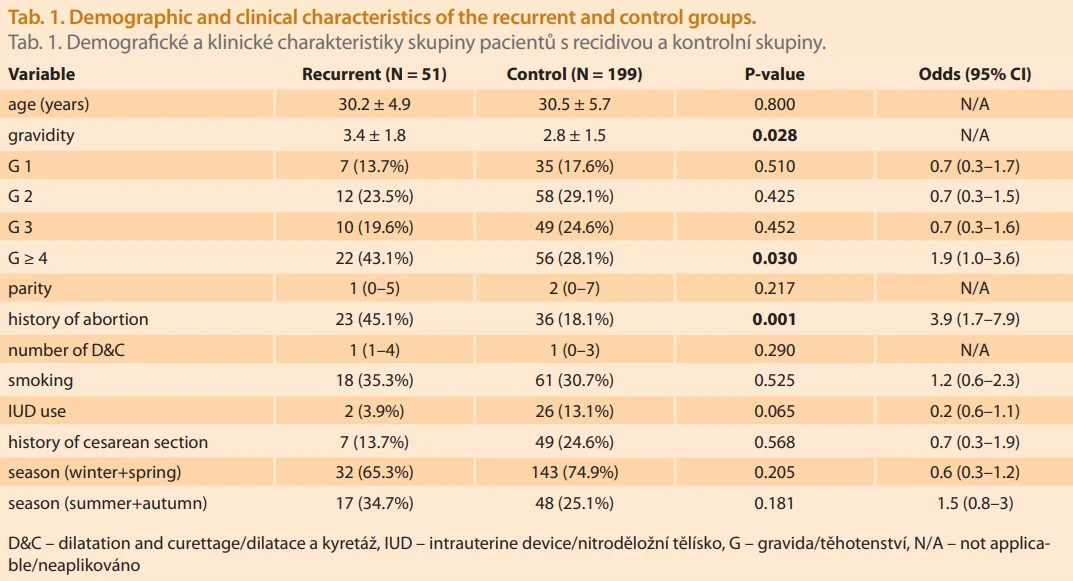
A total of 250 patients were included in the study, comprising 51 patients in the recurrent ectopic pregnancy group and 199 patients in the control group. The mean age was comparable between groups (30.2 ± 4.9 vs. 30.5 ± 5.7 years, P = 0.800). However, the mean gravida was significantly higher in the recurrent group (3.4 ± 1.8 vs. 2.8 ± 1.5, P = 0.028). When stratified, gravida ≥ 4 was significantly more frequent among patients with recurrent ectopic pregnancy (43.1 vs. 28.1%, P = 0.030; OR 1.9, 95% CI 1.0–3.6). Parity did not differ significantly between groups (P = 0.217). A history of abortion was markedly more common in the recurrent group (45.1 vs. 18.1%, P = 0.001), representing nearly a fourfold increased risk (OR 3.9, 95% CI 1.7–7.9). The number of prior dilatation and curettage procedures, smoking status, intrauterine device use, and previous cesarean section history were similar between groups (P > 0.05 for all). Seasonal distribution at presentation also showed no significant association with recurrence (Tab. 1).
Presenting symptoms and clinical findings
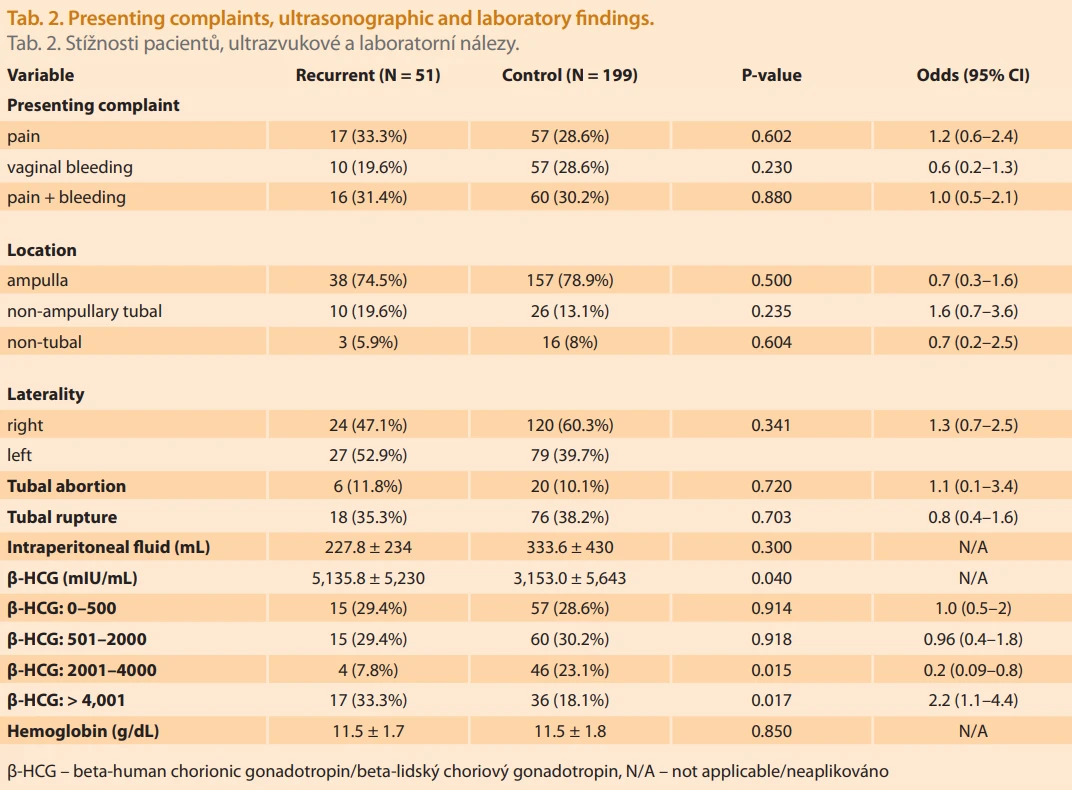
Presenting complaints, ultrasonographic findings, and laboratory parameters are shown in Tab. 2. Presenting complaints did not significantly differ between groups. Pain (33.3 vs. 28.6%, P = 0.602), vaginal bleeding, and combined pain with bleeding were similarly distributed. The majority of ectopic pregnancies were located in the ampullary region in both groups (74.5 vs. 78.9%, P = 0.500). Non-ampullary tubal and non-tubal localizations were also comparable. Laterality (right vs. left) did not significantly differ between groups (P = 0.341). The rates of tubal abortion and tubal rupture were similar (P = 0.720 and P = 0.703, resp.). Mean intraperitoneal fluid volume did not differ significantly (227.8 ± 234 mL vs. 333.6 ± 430 mL, P = 0.300). However, serum b-hCG levels were significantly higher in the recurrent group (5,135.8 ± 5,230 vs. 3,153.0 ± 5,643 mIU/mL, P = 0.040). When categorized, b-hCG levels between 2,001–4,000 mIU/mL were less frequent in the recurrent group (7.8 vs. 23.1%, P = 0.015; OR 0.2, 95% CI 0.09–0.8), whereas b-hCG levels > 4,001 mIU/mL were significantly more common (33.3 vs. 18.1%, P = 0.017; OR 2.2, 95% CI 1.1–4.4). Hemoglobin levels were comparable between groups (P = 0.85).
Treatment modalities and complications
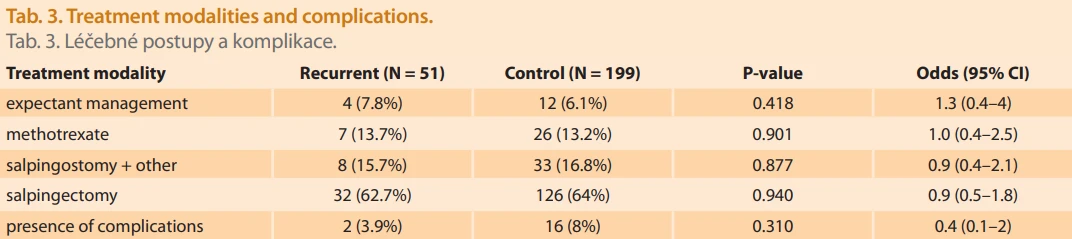
Management strategies did not significantly differ between groups. Rates of expectant management (7.8 vs. 6.1%), methotrexate treatment (13.7 vs. 13.2%), salpingostomy with additional procedures (15.7 vs. 16.8%), and salpingectomy (62.7 vs. 64%) were comparable (P > 0.05 for all). The overall complication rate was low and similar between groups (3.9 vs. 8%, P = 0.310) (Tab. 3).
Comparison of first and second ectopic pregnancy in the recurrent group
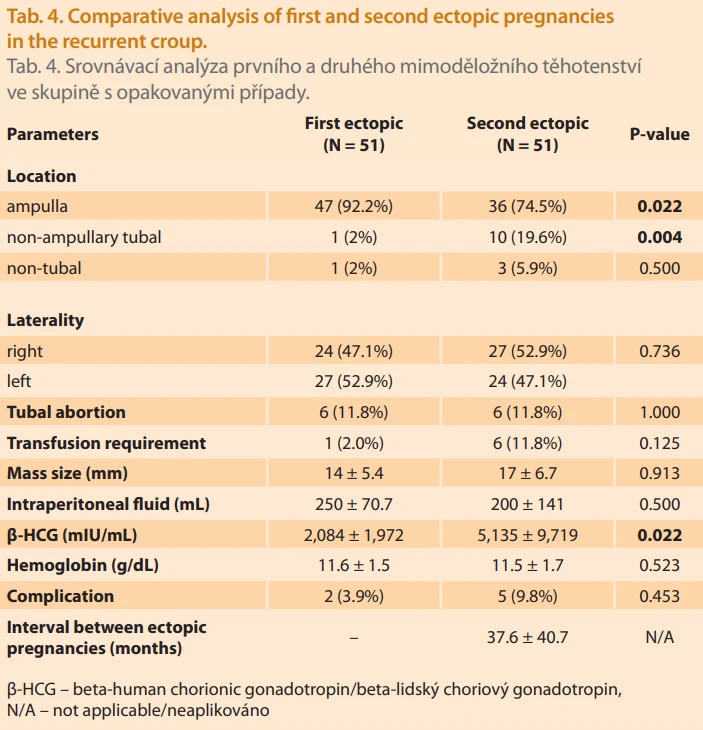
Within the recurrent group, comparative analysis of first and second ectopic pregnancies is shown in Tab. 4. Recurrent group, significant differences were observed between the first and second ectopic pregnancies. Ampullary localization was significantly more frequent in the first ectopic pregnancy (92.2 vs. 74.5%, P = 0.022), whereas non-ampullary tubal localization was significantly more common during the second episode (2 vs. 19.6%, P = 0.004). b-hCG levels were significantly higher in the second ectopic pregnancy (5,135 ± 9,719 vs. 2,084 ± 1,972 mIU/mL, P = 0.022). No significant differences were observed in laterality, tubal abortion, transfusion requirement, mass size, intraperitoneal fluid volume, hemoglobin levels, or complication rates (P > 0.05 for all). The mean interval between the first and second ectopic pregnancy was 37.6 ± 40.7 months.
Logistic regression analysis
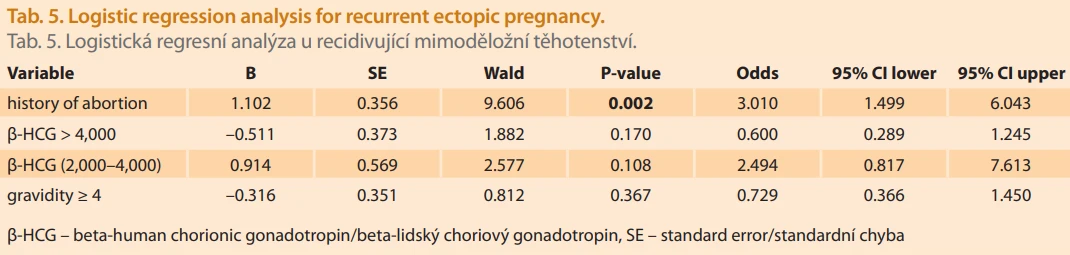
Multivariate logistic regression analysis identified a history of abortion as an independent predictor of recurrent ectopic pregnancy (B =1.102, P = 0.002), corresponding to a threefold increased risk (OR 3.01, 95% CI 1.499–6.043). b-hCG > 4,000 mIU/mL, b-hCG levels between 2,000–4,000 mIU/mL, and gravida ≥ 4 were not independent predictors after adjustment (P > 0.05) (Tab. 5).
Discussion
Ectopic pregnancy remains a major cause of 1st-trimester maternal morbidity and mortality, and its incidence has increased in recent decades [1,2]. This rise has been attributed to the increasing prevalence of pelvic inflammatory disease, expanded use of assisted reproductive technologies, and improvements in diagnostic modalities [1,2]. Recurrent ectopic pregnancy represents a substantial reproductive health burden, with reported recurrence rates ranging between 10% and 27% [5,6]. In our cohort, the recurrence rate was 20.4%, consistent with the current literature.
The principal finding of our study is that a history of spontaneous abortion is an independent predictor of recurrent ectopic pregnancy. This result is consistent with previous data. Wang et al. reported a strong dose-dependent association between prior abortions and recurrence risk [10], and similar observations were described in the classical study by Butts et al. [11]. The association may be explained by shared underlying mechanisms such as tubal epithelial damage, impaired ciliary function, altered tubal motility, and abnormalities in endometrial receptivity [9,10]. Recurrent pregnancy loss may also reflect subclinical infection or structural tubal pathology, thereby predisposing to abnormal implantation.
Although gravidity was significantly higher in the recurrent group, it did not remain independently associated with recurrence after multivariate adjustment. This finding suggests that cumulative exposure to reproductive risk factors – such as infections, prior surgical interventions, or pregnancy loss – rather than gravidity itself may account for the increased risk. Previous studies have identified nulliparity as a significant predictor [3], possibly reflecting unrecognized tubal pathology in women without prior live births.
Higher serum b-hCG levels (≥ 4,000 IU/L) were more frequent in recurrent cases; however, this parameter was not independently associated with recurrence. Elevated hCG levels likely reflect later presentation or more advanced disease rather than a direct etiological factor. Consistent with previous reports, serum hCG does not appear to reliably predict recurrence risk [11,12].
Smoking is a well-established, dose-dependent risk factor for ectopic pregnancy, with relative risks ranging from 1.7 to 3.9 [13,14], increasing further among heavy smokers [15,16]. Mechanistically, nicotine induces structural and functional damage in the fallopian tube, including impaired ciliary activity, altered estrogen metabolism, and dysregulated apoptotic pathways [17–19]. Despite this biological plausibility, no significant association was observed in our cohort, likely due to sample size limitations and retrospective exposure assessment.
Pelvic inflammatory disease, particularly Chlamydia trachomatis infection, remains one of the strongest risk factors for ectopic pregnancy [20,21]. Tubal adhesions, hydrosalpinx, and macroscopic pelvic pathology have been associated with increased recurrence risk [5,22], and higher rates of peritubal adhesions have been reported in recurrent cases [3]. These findings underscore the central role of tubal damage in the pathogenesis of recurrence.
The influence of surgical management on recurrence remains controversial. Some studies suggest that salpingectomy reduces recurrence compared with salpingostomy [5,23], whereas others report no significant difference [5]. An increased recurrence risk following salpingostomy has been described [3], possibly due to preservation of damaged tubal tissue. Nevertheless, fertility preservation considerations necessitate individualized treatment decisions [24,25]. Medical management with methotrexate has been associated with lower recurrence in some studies [26,27], likely reflecting earlier-stage disease with less tubal damage, although recurrence cannot be excluded.
Infertility has been identified as a significant risk factor for recurrence [28], and in in vitro fertilization (IVF) populations, prior tubal surgery, adhesions, and endometriosis have been implicated [29]. Although maternal age was not significantly associated with recurrence in our study, advanced age has been linked to ectopic pregnancy risk in other reports [30,31]. Furthermore, low educational level has been identified as an independent predictor [3], highlighting the potential influence of socioeconomic and health literacy factors.
From a clinical perspective, prevention of recurrence requires a multifactorial approach. Smoking cessation, prevention and early treatment of sexually transmitted infections, and promotion of safe sexual behaviors remain essential [32,33]. Importantly, a population-based study demonstrated that a substantial proportion of recurrence risk factors may be modifiable [34], suggesting that targeted prevention programs could significantly reduce disease burden.
The retrospective design and single-center setting represent the main limitations of our study. The relatively small sample size may have limited statistical power for certain variables, particularly smoking and pelvic inflammatory disease. In addition, retrospective data collection precluded detailed assessment of infection history and exposure intensity. Larger prospective, multicenter studies are warranted to further clarify independent predictors and optimize preventive strategies.
Contribution to authorship
CÜ – contributed to study conception and design, data collection, data interpretation, and manuscript drafting.
MD – contributed to study design, statistical analysis, critical revision of the manuscript, and supervision of the research process.
Both authors approved the final version of the manuscript and agree to be accountable for all aspects of the work.
Submitted/Doručeno: 8. 2. 2026
Accepted/Přijato: 10. 2. 2026
Coşkun Ümit, MD
Ankara Provincial Health Directorate
Atatürk Sanatoryum Training
Research Hospital
Cd. No: 271
06290 Keçiören/Ankara
Turkey
drcoskunumitt@gmail.com
Zdroje
1. American College of Obstetricians and Gynecologists. ACOG practice bulletin no. 193: tubal ectopic pregnancy. Obstet Gynecol 2018; 131 (3): e91–e103. doi: 10.1097/AOG.0000000000002560.
2. Creanga AA, Syverson C, Seed K et al. Pregnancy-related mortality in the United States, 2011–2013. Obstet Gynecol 2017; 130 (2): 366–373. doi: 10.1097/AOG.0000000000002114.
3. Barnhart KT. Ectopic pregnancy. N Engl J Med 2009; 361 (4): 379–387. doi: 10.1056/NEJMcp 0810384.
4. Bouyer J, Coste J, Fernandez H et al. Sites of ectopic pregnancy: a 10 year population-based study of 1800 cases. Hum Reprod 2002; 17 (12): 3224–3230. doi: 10.1093/humrep/17.12.3224.
5. Brunham RC, Gottlieb SL, Paavonen J. Pelvic inflammatory disease. N Engl J Med 2015; 372 (21): 2039–2048. doi: 10.1056/NEJMra1411426.
6. Perkins KM, Boulet SL, Kissin DM et al. Risk of ectopic pregnancy associated with assisted reproductive technology in the United States, 2001–2011. Obstet Gynecol 2015; 125 (1): 70–78. doi: 10.1097/AOG.0000000000000584.
7. Skjeldestad FE, Hadgu A, Eriksson N. Epidemiology of repeat ectopic pregnancy: a population-based prospective cohort study. Obstet Gynecol 1998; 91 (1): 129–135. doi: 10.1016/ s0029-7844 (97) 00603-0.
8. Karaer A, Avsar FA, Batioglu S. Risk factors for ectopic pregnancy: a case-control study. Aust N Z J Obstet Gynaecol 2006; 46 (6): 521–527. doi: 10.1111/j.1479-828X.2006.00653.x.
9.. Malacova E, Kemp A, Hart R et al. Long-term risk of ectopic pregnancy varies by method of tubal sterilization: a whole-population study. Fertil Steril 2014; 101 (3): 728–734. doi: 10.1016/j.fertnstert.2013.11.127.
10. Wang X, Huang L, Yu Y et al. Risk factors and clinical characteristics of recurrent ectopic pregnancy: a case-control study. J Obstet Gynaecol Res 2020; 46 (7): 1098–1103. doi: 10.1111/jog.14253.
11. Butts S, Sammel M, Hummel A et al. Risk factors and clinical features of recurrent ectopic pregnancy: a case control study. Fertil Steril 2003; 80 (6): 1340–1344. doi: 10.1016/s0015-0282 (03) 02206-4.
12. Parazzini F, Tozzi L, Ferraroni M et al. Risk factors for ectopic pregnancy: an Italian case-control study. Obstet Gynecol 1992; 80 (5): 821–826.
13. Parazzini F, Ferraroni M, Tozzi L et al. Induced abortions and risk of ectopic pregnancy. Hum Reprod 1995; 10 (7): 1841–1844. doi: 10.1093/oxfordjournals.humrep.a136188.
14. Kirk E, Condous G, Van Calster B et al. A validation of the most commonly used protocol to predict the success of single-dose methotrexate in the treatment of ectopic pregnancy. Hum Reprod 2007; 22 (3): 858–863. doi: 10.1093/humrep/del433.
15. Lipscomb GH, McCord ML, Stovall TG et al. Predictors of success of methotrexate treatment in women with tubal ectopic pregnancies. N Engl J Med 1999; 341 (26): 1974–1978. doi: 10.1056/NEJM199912233412604.
16. Ankum WM, Mol BW, Van der Veen F et al. Risk factors for ectopic pregnancy: a meta-analysis. Fertil Steril 1996; 65 (6): 1093–1099.
17. Shaw JL, Dey SK, Critchley HO et al. Current knowledge of the aetiology of human tubal ectopic pregnancy. Hum Reprod Update 2010; 16 (4): 432–444. doi: 10.1093/humupd/dmp057.
18. Kendrick JS, Atrash HK, Strauss LT et al. Vaginal douching and the risk of ectopic pregnancy among black women. Am J Obstet Gynecol 1997; 176 (5): 991–997. doi: 10.1016/s0002-9378 (97) 70391-0.
19. Handler A, Davis F, Ferre C et al. The relationship of smoking and ectopic pregnancy. Am J Public Health 1989; 79 (9): 1239–1242. doi: 10.2105/ajph.79.9.1239.
20. Bouyer J, Coste J, Shojaei T et al. Risk factors for ectopic pregnancy: a comprehensive analysis based on a large case-control, population-based study in France. Am J Epidemiol 2003; 157 (3): 185–194. doi: 10.1093/aje/kwf190.
21. Centers for disease control and prevention. Health effects of cigarettes: reproductive health. Updated January 2025. [online]. Available from: https: //www.cdc.gov/tobacco/about/cigarettes-and-reproductive-health.html.
22. Horne AW, Brown JK, Nio-Kobayashi J et al. The association between smoking and ectopic pregnancy: why nicotine is BAD for your fallopian tube. PLoS One 2014; 9 (2): e89400. doi: 10.1371/journal.pone.0089400.
23. Weström L, Joesoef R, Reynolds G et al. Pelvic inflammatory disease and fertility: a cohort study of 1,844 women with laparoscopically verified disease and 657 control women with normal laparoscopic results. Sex Transm Dis 1992; 19 (4): 185–192.
24. Yao M, Tulandi T. Current status of surgical and nonsurgical management of ectopic pregnancy. Fertil Steril 1997; 67 (3): 421–433. doi: 10.1016/s0015-0282 (97) 80064-7.
25. Fernandez H, Capmas P, Lucot JP et al. Fertility after ectopic pregnancy: the DEMETER randomized trial. Hum Reprod 2013; 28 (5): 1247–1253. doi: 10.1093/humrep/det037.
26. Hajenius PJ, Mol F, Mol BW et al. Interventions for tubal ectopic pregnancy. Cochrane Database Syst Rev 2007; 2007 (1): CD000324. doi: 10.1002/14651858.CD000324.pub2.
27. Capmas P, Bouyer J, Fernandez H. Treatment of ectopic pregnancies in 2014: new answers to some old questions. Fertil Steril 2014; 101 (3): 615–620. doi: 10.1016/j.fertnstert.2014.01.029.
28. Levin G, Dior UP, Shushan A et al. Risk factors for recurrent ectopic pregnancy following single-dose methotrexate treatment. Eur J Contracept Reprod Health Care 2019; 24 (4): 294–298. doi: 10.1080/13625187.2019.1625324.
29. Bachman EA, Barnhart K. Medical management of ectopic pregnancy: a comparison of regimens. Clin Obstet Gynecol 2012; 55 (2): 440–447. doi: 10.1097/GRF.0b013e3182510a73.
30. Zhou J, Shi W, Li C et al. Risk factors for recurrent ectopic pregnancy: a case-control study. BJOG 2016; 123 (Suppl 3): 82–89. doi: 10.1111/14 71-0528.14011.
31. Tan Y, Bu ZQ, Shi H et al. Risk factors of recurrent ectopic pregnancy in patients treated with in vitro fertilization cycles: a matched case-control study. Front Endocrinol (Lausanne) 2020; 11 : 552117. doi: 10.3389/fendo.2020.552117.
32. Gaskins AJ, Missmer SA, Rich-Edwards JW et al. Demographic, lifestyle, and reproductive risk factors for ectopic pregnancy. Fertil Steril 2018; 110 (7): 1328–1337. doi: 10.1016/j.fertnstert.2018.08.022.
33. Coste J, Job-Spira N, Fernandez H et al. Risk factors for ectopic pregnancy: a case-control study in France, with special focus on infectious factors. Am J Epidemiol 1991; 133 (9): 839–849. doi: 10.1093/oxfordjournals.aje.a115964.
34. Epee-Bekima M, Overton C. Diagnosis and treatment of ectopic pregnancy. Practitioner 2013; 257 (1759): 15–17.
Štítky
Dětská gynekologie Gynekologie a porodnictví Reprodukční medicínaČlánek vyšel v časopise
Česká gynekologie

2026 Číslo 4
Nejčtenější v tomto čísle
- 150 years of the Apolinář maternity hospital in Prague – the history of one of the longest-running maternity hospitals in the world
- Comparative diagnostic accuracy of office hysteroscopy and three-dimensional transvaginal ultrasonography versus histopathology in women with abnormal uterine bleeding
- Personalized approach to infertility treatment in a patient with polyendocrine metabolic ovarian syndrome and chronic pancreatitis
- Ultrasound examination during labor – a prospective pilot comparative study of clinical and ultrasonographic accuracy