
Meta-analysis on the association of the COMT Val158Met variant with preeclampsia risk
Authors:
S. Jangde 1
 ; B. Meher 1
; N. Sahu 1
; H. K. Verma 2
; L. V. K. S. Bhaskar 1
; B. Meher 1
; N. Sahu 1
; H. K. Verma 2
; L. V. K. S. Bhaskar 1
Authors place of work:
Department of Zoology, Guru Ghasidas Vishwavidyalaya, Bilaspur, India
1; Department of Bioscience and Biomedical Engineering, Indian Institute of Technology, Bhilai, India
2
Published in the journal:
Ceska Gynekol 2026; 91(4): 314-321
Category:
Původní práce
doi:
https://doi.org/10.48095/cccg2026314
Summary
Catecholamine-O-methyl transferase (COMT) catalyzes the O-methylation of catechol-structured compounds such as catecholamines and catecholestrogens. A genetic variation in the human COMT gene (rs4680 or Val158Met) significantly reduces three-to-four-fold catecholamine metabolism and influences neurotransmitter levels, thereby modulating preeclampsia (PE) susceptibility. The present meta-analysis was conducted to evaluate the link between the COMT Val158Met variant and PE risk. Case-control studies published until November 20, 2025 were systematically searched from PubMed, Google Scholar, and Web of Science databases. To assess the association between the COMT Val158Met variant and PE, Odds ratios and 95% confidence intervals were calculated under three genetic models. The results indicated no significant association between the COMT Val158Met variant and PE risk across three genetic models, including the allele (Met vs. Val: Overall OR 1.19, 95% CI 1.00–1.43, P = 0.052), recessive (Met/Met + Met/Val vs. Val/Val: Overall OR 1.16, 95% CI 0.95–1.40, P = 0.137), and dominant (Met/Met vs. Met/Val + Val/Val OR 1.39, 95% CI 0.97–2.00, P = 0.075) models. Furthermore, subgroup analyses based on ethnicity also indicated no association between the Val158Met variant and PE risk in Caucasian and Asian populations. Sensitivity analyses conducted using the leave-one-out method revealed that the results are robust. Asymmetry observed in Begg’s funnel plot indicated a significant publication bias in the dominant model (P = 0.012). In summary, results showed that the COMT Val158Met variant is not associated with PE risk. As this meta-analysis contradicts the biological plausibility that COMT alleles influence catecholamine neurotransmitters and PE, the results warrant careful interpretation and further investigation.
Keywords:
meta-analysis – preeclampsia – catecholamine-o-methyl transferase – Val158Met variant
Introduction
Preeclampsia (PE) is defined by high blood pressure during pregnancy, affecting approximately 2–8% of pregnancies worldwide and resulting in over 50,000 maternal deaths and more than 500,000 fetal deaths annually [1]. Complications of PE include proteinuria (amounting to ≥ 0.3 g/24 hours), nausea, vomiting (particularly in the 2nd trimester), severe headaches, visual impairment, abdominal pain, oedema affecting the face and hands, as well as significant damage to major organs such as the brain, liver, kidneys, and placenta, and can lead to premature birth and potentially fatal outcome [2,3]. A study on the global and regional factors contributing to maternal deaths during 2009–2020, indicated that the hypertensive disorders accounted for 16%, ranking third behind haemorrhage (27%) and indirect obstetric deaths (23%) [4]. Preeclampsia driven by several factors including diabetes, obesity, kidney disease, first pregnancies (twin or triplets), genetic, epigenetic, life style and environment [5]. The PE mainly occurred due to impaired invasion of defective trophoblast cells into the maternal spiral arteries leading to endothelial dysfunction and oxidative stress [6]. Further, women with PE also experience neurological disorders like migraine, epilepsy, dementia and cognitive dysfunction [7–9]. Dopamine, epinephrin and norepinephrin are primary catecholamine play a pivotal role various physiological function such as cardiovascular function, vasocontractions, and stress response. Increased levels of catecholamine leads to excessive stimulation of the sympathetic nervous system in PE women [10]. This has been supported by the increased plasma levels of norepinephrine and reduced expression of placental norepinephrine transporters in the PE women compared to normal pregnant women [11,12].
Catecholamine-o-methyl transferase (COMT) catalyses the O-methylation of catechol-structured compounds such as catecholamines and catecholestrogens. This methylation step converts neurotransmitters and catechol estrogens into more water-soluble metabolites that are more easily excreted from the body [13]. The human gene coding for the catecholamine-o-methyl transferase is the COMT gene, located on chromosome 22q11.2 and spans about 27.22 kb. In humans, COMT gene by using two different promoters and alternative translation initiation sites, produces a 24 kDa cytosolic protein (S-COMT) and a 30 kDa membrane-bound protein (membrane-bound COMT) [14]. For the COMT gene, one of the main genetic variations is rs4680: G>A, which leads to changes in Val158Met in S-COMT and Val108Met in MB-COMT isoforms. This mutation significantly reduces three-to-four-fold catecholamine metabolism in both the periphery and in the brain resulting upregulation of dopamine prefrontal cortex and promote hypertension and endothelial damages in preeclampsia patients [12,15]. As COMT gene plays a crucial role in regulating catecholamine levels, the Val158Met has a potential link to the PE susceptibility. Various studies have focused on COMT Val158Met variant and the risk of PE in Asian and Caucasian populations yielded inconsistent results [16–23]. The aim of the study is to explore the relationship between COMT Val158Met variant and PE risk using meta-analysis.
Materials and methods
Literature search and data collection
Articles that evaluated the association between the risk of PE and the COMT Val158Met variant were retrieved from PubMed, Google Scholar and Web of Science databases. The combinations of the following keywords were used for literature search: “Preeclampsia” or “Pregnancy Hypertension” and “Catechol-O-Methyltransferase” or “COMT” and “Val158Met” or “Val108Met” or “rs4680” and “Polymorphism” or “SNP”. The last search was performed on 20 November 2025. The criteria for inclusion encompass:
- studies that investigate the relationship between COMT genetic variants and PE;
- prospective case-control studies;
- studies that provide genotype information necessary for calculating odds ratios.
The criteria for exclusion consist of:
- studies that do not meet the inclusion criteria;
- case reports;
- studies lacking genotype data.
The data extracted from the eligible studies included: the primary author’s name, year of publication, country, population ethnicity, control source, genotyping methods, and genotype counts from both case and control groups.
Statistical analysis
The Hardy-Weinberg equilibrium in control groups was assessed using the goodness-of-fit Chi-square test. The association between COMT Val158Met and the risk of PE was assessed by calculating the odds ratio (OR) and 95% confidence interval (CI). The variability in effect estimates due to heterogeneity was assessed using the I2 statistics. Depending on the presence or absence of heterogeneity, either a fixed--effect model or a random-effect model was utilized for calculating the pooled OR and 95% CI. The significance of the pooled OR was assessed using the Z test. To ensure the robustness of the findings, a “leave--one-out” sensitivity analysis was performed. Begg’s funnel plots and Egger’s regression test for funnel plot asymmetry were implemented to identify publication bias. Furthermore, subgroup analyses were carried out to examine associations based on ethnicity. The MetaGenyo web tool was utilized for data analysis [24].
Results
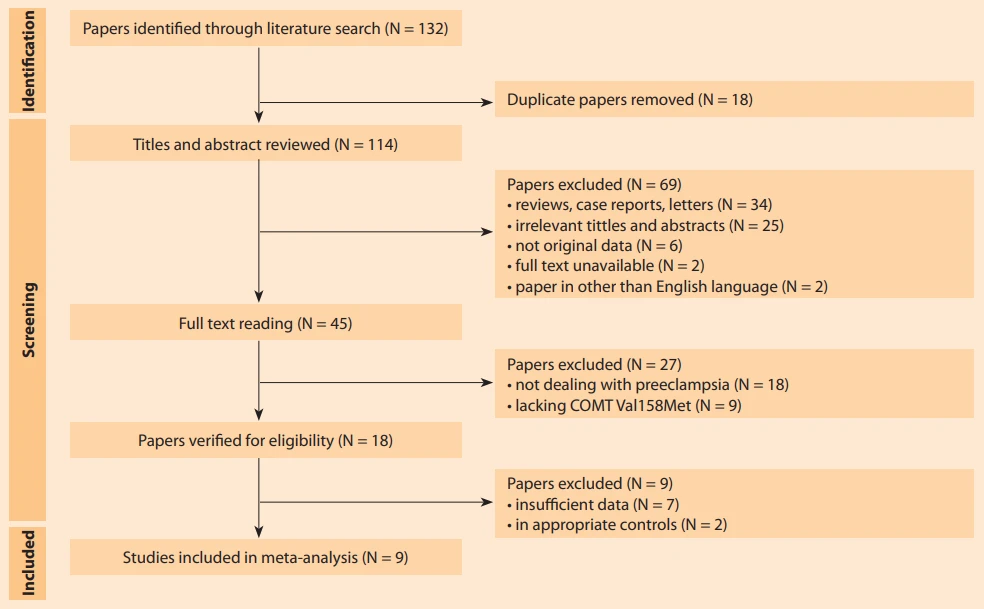
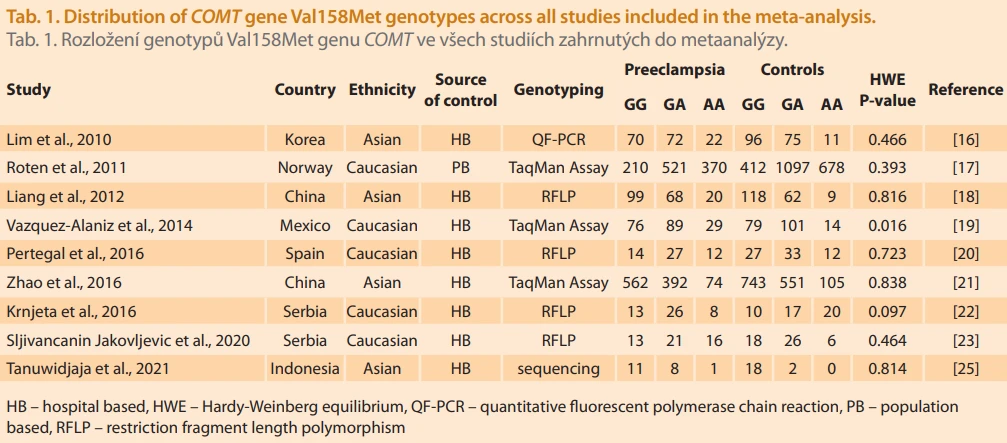
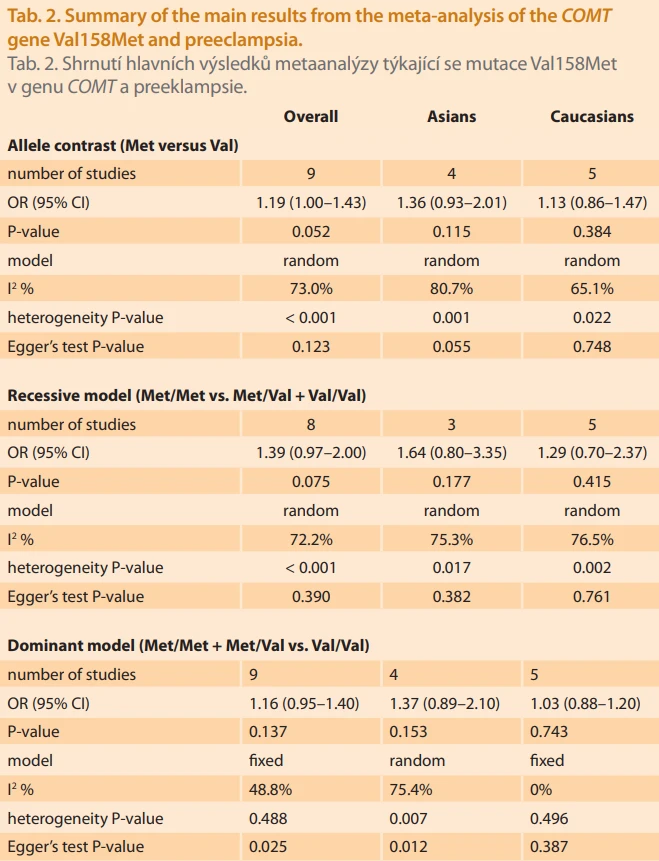
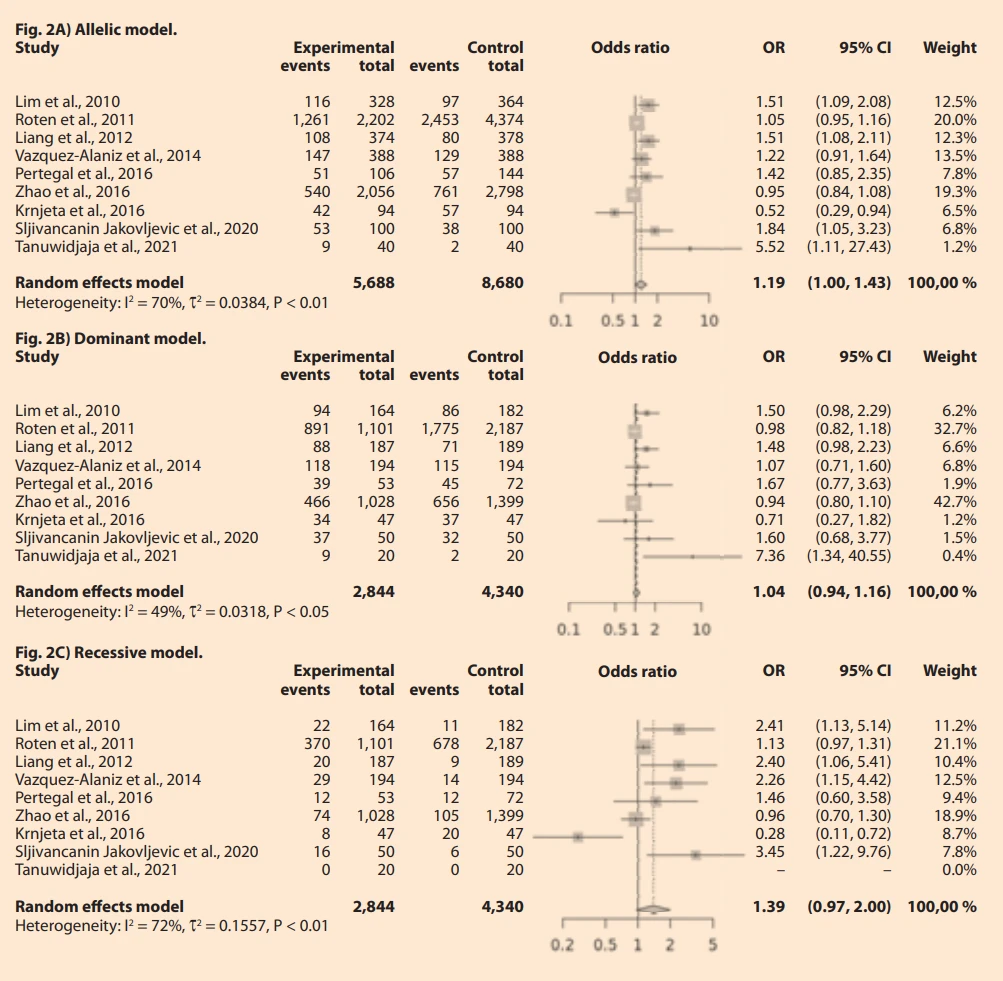
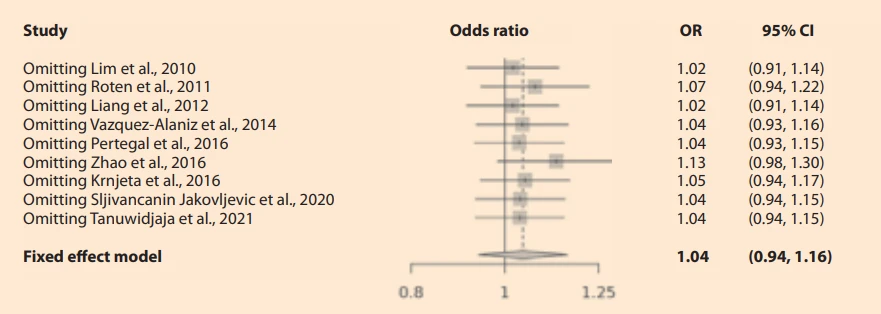
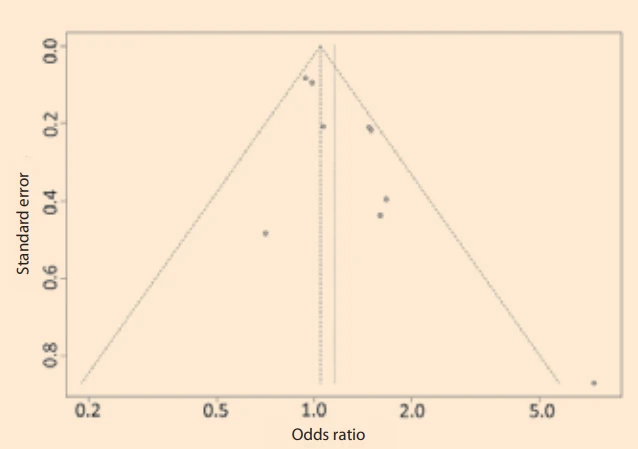
Nine case-control studies including2,844 preeclampsia cases and 4,340 con-trols were included in this meta-analysis (Fig. 1) [16–23,25]. Baseline characteristics of the studies documented in Tab. 1 shows that these nine studies were performed on the Korean, Norwegian, Chinese, Mexican, Spanish, and Serbian populations. Heterogeneity test revealed significant heterogeneity among the studies in allelic (I2 = 73%) and recessive (I2 = 72.2%) models (Tab. 2). However no heterogeneity between studies was found in dominant model (I2 = 48.8%). The relationship between the COMT Val158Met variant and PE across various genetic models is illustrated in Tab. 2 and Fig. 2. The meta-analysis performed using different genetic models indicated that the COMT Val158Met variant does not correlate with the risk of developing PE (Met vs. Val: Overall OR 1.19, 95% CI 1.00–1.43, P = 0.052; Met/Met + Met/Val vs. Val/Val: OverallOR 1.16, 95% CI 0.95–1.40, P = 0.137; Met/Met vs. Met/Val + Val/Val OR 1.39, 95% CI 0.97–2.00, P = 0.075). Sub group analysis by ethnicity demonstrated that the Val158Met variant is not associated with increased risk of PE in both Asians and Caucasians (Tab. 2). The sensitivity analysis confirmed that the individual studies has no major impact the pooled OR of COMT Val158Met variant, which suggested that the findings of the meta--analysis is statistically correct (Fig. 3). The symmetrical nature of the Begg’s funnel plots in allelic and recessive genetic models, indicating that there is no publication bias. A significant asymmetry in funnel plots was observed in the dominant model, indicating publication bias (Fig. 4). Also, Egger’s test verifies the statistical significance of the of funnel plot asymmetry for COMT Val158Met polymorphism (Allelic P = 0.123; recessive P = 0.390 and dominant P = 0.025) (Tab. 2).
Discussion
The present meta-analysis was conducted to examine the relationship between the COMT Val158Met variant and the risk of PE across three genetic models, including allelic, dominant, recessive models. The findings of the meta-analysis indicated that women possessing the Met allele or the Met/Met and Val/Met genotypes of the COMT Val158Met variant did not exhibit an increased risk of PE. We conducted a sub-group analysis based on ethnicity, which included three studies involving Asians and five studies involving Caucasians. The sub-group analysis revealed no significant associations between the COMT Val158Met genotypes and the increased risk of PE in either the Asian or Caucasian populations. Additionally, this meta--analysis showed a significant heterogeneity among the studies. Furthermore, no publication bias was detected in the estimated effect sizes across the studies, and the sensitivity analysis confirmed that the results are statistically robust.
Generally, COMT serves as an important regulator of catecholamine metabolism via methylation and inactivation [26]. Although the precise role of COMT Val158Met variant in the development of PE remains unclear, a plausible mechanism is that carriers of Met158 allele may show reduced COMT enzymatic activity, which eventually attribute to intimate relationship between COMT and PE risk. It has been suggested that the Met residue at position 158 of COMT protein thought to be more unstable than the enzyme with a Val residue at this site [27]. Although the findings of previous studies indicated that the risk of PE was higher in 158Met carriers [16,18]. subsequent studies were inconclusive. Subsequent studies conducted on the associations between COMT genetic variants and PE severity are also contradictory. COMT Val158Met variant in allelic (met) and recessive (met/met) models showed significantly reduced risk of onset of severe early PE in Serbian womenc [22]. Another study from the same population showed that the val/val homozygotes of COMT Val158Met variant showed 3.7-fold increased the risk of PE pregnant women [23]. Estimation of placental COMT activity in normal and high--risk pregnancies at term using radioenzymatic assays showed that the COMT activity is low in patients with hypertension [28]. However, the link between COMT Val158Met genetic variation and hypertension remains unclear. Analysis of COMT Val158Met in Norwegian nondiabetic individuals showed that the individuals having Val/Val homozygote exhibited higher prevalence of increased systolic blood pressure compared to the individuals having other genotypes [29]. Further, the carriers of the low activity Met/Met genotype were associated a decreased risk of myocardial infarction compared to those with Val/Val homozygotes [30]. A meta-analysis of six studies found an increased risk of PE in females carrying the 158Met allele, particularly in the homozygous state [31]. Distribution of COMT 158Met allele across global populations showed an extensive geographic differentiation with the derived 158Met allele appearing at a lower frequency in Asian populations (17 to 29%) compared to African (27 to 34%) and Caucasian (47 to 60%) population [32–35]. Therefore, it is believed that an individual’s ethnic background may have an influence association between COMT Val158Met variant and PE.
The current meta-analysis has a number of limitations that should be mentioned. Firstly, due to the complexity of PE, which encompasses both genetic and environmental factors, the lack of adequate data had prevented to perform further analyses to evaluate the impact of the estimated outcome. Secondly, the research articles included in this analysis are relatively less and feature comparatively small sample sizes. As sample size determine the effect size and power, future studies should be conducted using the larger sample sizes to drawing more reliable conclusions. In summary, we systematically reviewed the association of COMT Val158Met with the risk of PE. The results showed that COMT Val158Met variant is not associated with PE risk. As this meta-analysis contradict the biological plausibility that COMT alleles influence catecholamine neurotransmitters and PE, thus requiring further exploration by identifying other polymorphisms and testing them to identify their potential impact on phenotype traits of preeclampsia.
Contribution to authorship
LVKSB – was responsible for conceptualization, data curation, formal analysis, methodology, project administration, resources, writing and editing.
NS – was responsible for supervision, writing and editing.
SJ, BM, HKV – were responsible for data collection, writing and editing.
Submitted/Doručeno: 27. 1. 2026
Accepted/Přijato: 10. 2. 2026
Prof. L. V. K. S. Bhaskar, PhD., Dsc.
Department of Zoology
Guru Ghasidas Vishwavidyalaya
Koni 495009
Bilaspur, India
lvksbhaskar@gmail.com
Zdroje
1. Shandilya V, Sinha N, Rani S. Preeclampsia: prevalence, risk factors, and impact on mother and fetus. Indian J Cardiovasc Dis Women 2023; 8 (3): 193–199. doi: 10.25259/IJCDW_32_2023.
2. Li Z, Dai Y, Yun L et al. A prediction model for the progression from gestational hypertension to pre-eclampsia complicated with HELLP syndrome. Int J Gynaecol Obstet 2024; 165 (3): 1002–1012. doi: 10.1002/ijgo.15274.
3. Jenner B. Hypertension in pregnancy and pre-eclampsia. Medicine 2024; 52 (10): 620–626. doi: 10.1016/j.mpmed.2024.07.011.
4. Cresswell JA, Alexander M, Chong MY et al. Global and regional causes of maternal deaths 2009-20: a WHO systematic analysis. Lancet Glob Health 2025; 13 (4): e626–e634. doi: 10.1016/S2214-109X (24) 00560-6.
5. Paliwal P, Kshirsagar NS, Patange RP. Prediction of pre-eclampsia and eclampsia complications using PIERS. Bioinformation 2024; 20 (10): 1383–1389. doi: 10.6026/9732063002001383.
6. Mukherjee I, Dhar R, Singh S et al. Oxidative stress-induced impairment of trophoblast function causes preeclampsia through the unfolded protein response pathway. Sci Rep 2021; 11 (1): 18415. doi: 10.1038/s41598-021-97799-y.
7. Basit S, Wohlfahrt J, Boyd HA. Pre-eclampsia and risk of dementia later in life: nationwide cohort study. BMJ 2018; 363: k4109. doi: 10.1136/bmj.k4109.
8. Adank MC, Hussainali RF, Oosterveer LC et al. Hypertensive disorders of pregnancy and cognitive impairment: a prospective cohort study. Neurology 2021; 96 (5): e709–e718. doi: 10.1212/WNL.0000000000011363.
9. Friis T, Bergman L, Hesselman S et al. Gestational hypertension, preeclampsia, and eclampsia and future neurological disorders. JAMA Neurol 2025; 82 (2): 142–151. doi: 10.1001/jama neurol.2024.4426.
10. Natrajan PG, McGarrigle HH, Lawrence DM et al. Plasma noradrenaline and adrenaline levels in normal pregnancy and in pregnancy-induced hypertension. Br J Obstet Gynaecol 1982; 89 (12): 1041–1045. doi: 10.1111/j.1471-0528.1982.tb04661.x.
11. Na KH, Choi JH, Kim CH et al. Altered expression of norepinephrine transporter and norepinephrine in human placenta cause pre-eclampsia through regulated trophoblast invasion. Clin Exp Reprod Med 2013; 40 (1): 12–22. doi: 10.5653/cerm.2013.40.1.12.
12. Phoswa WN. Dopamine in the pathophysiology of preeclampsia and gestational hypertension: Monoamine Oxidase (MAO) and Catechol-O-methyl Transferase (COMT) as possible mechanisms. Oxid Med Cell Longev 2019; 2019 : 3546294. doi: 10.1155/2019/3546294.
13. Eisenhofer G, Kopin IJ, Goldstein DS. Catecholamine metabolism: a contemporary view with implications for physiology and medicine. Pharmacol Rev 2004; 56 (3): 331–349. doi: 10.1124/pr.56.3.1.
14. Grossman MH, Emanuel BS, Budarf ML. Chromosomal mapping of the human catechol-O-methyltransferase gene to 22q11.1----q11.2. Genomics 1992; 12 (4): 822–825. doi: 10.1016/0888-7543 (92) 90316-k.
15. Chen J, Lipska BK, Halim N et al. Functional analysis of genetic variation in catechol-O--methyltransferase (COMT): effects on mRNA, protein, and enzyme activity in postmortem human brain. Am J Hum Genet 2004; 75 (5): 807–821. doi: 10.1086/425589.
16. Lim JH, Kim SY, Kim DJ et al. Genetic polymorphism of catechol-O-methyltransferase and cytochrome P450c17a in preeclampsia. Pharmacogenet Genomics 2010; 20 (10): 605–610. doi: 10.1097/FPC.0b013e32833df033.
17. Roten LT, Fenstad MH, Forsmo S et al. A low COMT activity haplotype is associated with recurrent preeclampsia in a Norwegian population cohort (HUNT2). Mol Hum Reprod 2011; 17 (7): 439–446. doi: 10.1093/molehr/gar014.
18. Liang S, Liu X, Fan P et al. Association between Val158Met functional polymorphism in the COMT gene and risk of preeclampsia in a Chinese population. Arch Med Res 2012; 43 (2): 154–158. doi: 10.1016/j.arcmed.2012.03.002.
19. Vazquez-Alaniz F, Lumbreras-Márquez MI, Sandoval-Carrillo AA et al. Association of COMT G675A and MTHFR C677T polymorphisms with hypertensive disorders of pregnancy in Mexican mestizo population. Pregnancy Hypertens 2014; 4 (1): 59–64. doi: 10.1016/j.preghy.2013.11.002.
20. Pertegal M, Fenoy FJ, Hernández M et al. Fetal Val108/158Met catechol-O-methyltransferase (COMT) polymorphism and placental COMT activity are associated with the development of preeclampsia. Fertil Steril 2016; 105 (1): 134.–143.e1–3. doi: 10.1016/j.fertnstert.2015.09.019.
21. Zhao X, Liu J, Zhao C et al. Association between COMT Val158Met polymorphism and preeclampsia in the Chinese Han population. Hypertens Pregnancy 2016; 35 (4): 565–572. doi: 10.1080/10641955.2016.1211677.
22. Krnjeta T, Mirković L, Ignjatović S et al. Protective role of maternal P.VAL158MET catechol--O-methyltransferase polymorphism against early-onset preeclampsia and its complications. J Med Biochemy 2016; 35 (3): 312–318. doi: 10.1515/jomb-2016-0013.
23. Sljivancanin Jakovljevic T, Kontic-Vucinic O, Nikolic N et al. VAL158MET catechol O-methyltransferase polymorphism contributes to the development of preeclampsia. Hypertens Pregnancy 2020; 39 (4): 471–480. doi: 10.1080/10641955.2020.1843663.
24. Martorell-Marugan J, Toro-Dominguez D, Alarcon-Riquelme ME et al. MetaGenyo: a web tool for meta-analysis of genetic association studies. BMC Bioinformatics 2017; 18 (1): 563. doi: 10.1186/s12859-017-1990-4.
25. Tanuwidjaja SA, Wantania JJ, Tendean HM et al. Correlation of catechol-O-methyltransferase Val158met gene polymorphisms in severe preeclampsia in Manadonese – Indonesian population. Teikyo Med J 2021; 44 (2): 659–665.
26. Swift-Scanlan T, Smith CT, Bardowell SAet al. Comprehensive interrogation of CpG island methylation in the gene encoding COMT, a key estrogen and catecholamine regulator. BMC Med Genomics 2014; 7 : 5. doi: 10.1186/1755-8794-7-5.
27. Lotta T, Vidgren J, Tilgmann C et al. Kinetics of human soluble and membrane-bound catechol-O-methyltransferase: a revised mechanism and description of the thermolabile variant of the enzyme. Biochemistry 1995; 34 (13): 4202–4210. doi: 10.1021/bi000013a008.
28. Barnea ER, MacLusky NJ, DeCherney AH et al. Catechol-o-methyl transferase activity in the human term placenta. Am J Perinatol 1988; 5 (2): 121–127. doi: 10.1055/s-2007-999669.
29. Hagen K, Pettersen E, Stovner LJ et al. High systolic blood pressure is associated with Val/Val genotype in the catechol-o-methyltransferase gene. The Nord-Trøndelag Health Study (HUNT). Am J Hypertens 2007; 20 (1): 21–26. doi: 10.1016/j.amjhyper.2006.05.023.
30. Eriksson AL, Skrtic S, Niklason A et al. Association between the low activity genotype of catechol-O-methyltransferase and myocardial infarction in a hypertensive population. Eur Heart J 2004; 25 (5): 386–391. doi: 10.1016/j.ehj.2003.12.026.
31. Taravati A, Tohidi F, Moniri M et al. Catechol-O-methyltransferase gene polymorphism (Val158met) and development of pre-eclampsia. Arch Med Res 2017; 48 (2): 180–186. doi: 10.1016/j.arcmed.2017.03.006.
32. Weinshilboum RM, Otterness DM, Szumlanski CL. Methylation pharmacogenetics: catechol-O-methyltransferase, thiopurine methyltransferase, and histamine N-methyltransferase. Annu Rev Pharmacol Toxicol 1999; 39 : 19–52. doi: 10.1146/annurev.pharmtox.39.1.19.
33. Baclig MO, Predicala RZ, Mapua CA et al. Allelic and genotype frequencies of catechol-O-methyltransferase (Val158Met) and CYP2D6*10 (Pro34Ser) single nucleotide polymorphisms in the Philippines. Int J Mol Epidemiol Genet 2012; 3 (2): 115–121.
34. Palmatier MA, Kang AM, Kidd KK. Global variation in the frequencies of functionally different catechol-O-methyltransferase alleles. Biol Psychiatry 1999; 46 (4): 557–567. doi: 10.1016/s0006-3223 (99) 00098-0.
35. Barman D, Ghanta MK, Jangde S et al. A meta-analysis for understanding the role of the COMT Val158Met variant in the susceptibility to alcoholism. AJADA 2024; 11 (2): 24–36.
Štítky
Dětská gynekologie Gynekologie a porodnictví Reprodukční medicínaČlánek vyšel v časopise
Česká gynekologie
2026 Číslo 4
Nejčtenější v tomto čísle
- 150 years of the Apolinář maternity hospital in Prague – the history of one of the longest-running maternity hospitals in the world
- Comparative diagnostic accuracy of office hysteroscopy and three-dimensional transvaginal ultrasonography versus histopathology in women with abnormal uterine bleeding
- Personalized approach to infertility treatment in a patient with polyendocrine metabolic ovarian syndrome and chronic pancreatitis
- Ultrasound examination during labor – a prospective pilot comparative study of clinical and ultrasonographic accuracy